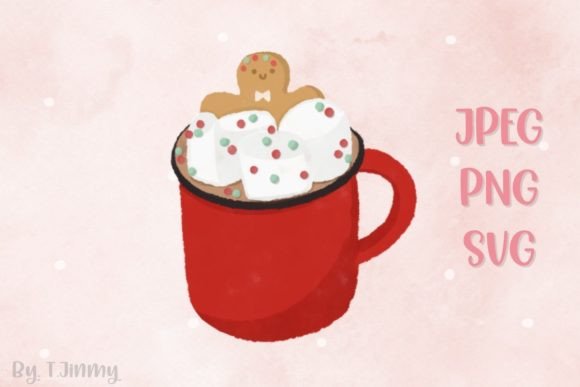
Christmas Drink Red Mug: An Embroidery Review
As a designer who spends more time behind an embroidery machine than a computer screen, I approach every new graphic with a specific question: will this actually stitch out well? When evaluating the Christmas Drink Red Mug, my assessment goes beyond its festive charm. While this asset is categorized under Illustrations and Graphics for broad digital use, my focus is strictly on its viability as a machine embroidery design for real-world production. The visual personality of this red mug suggests warmth and nostalgia, creating an immediate emotional connection that is essential for holiday merchandise. However, translating a flat graphic into thread requires a critical eye for detail, density, and fabric compatibility.
First Impressions and Stitch Translation
My first impression of the Christmas Drink Red Mug is that it possesses a balanced silhouette ideal for embroidery. The shape is distinct without being overly complex, which is crucial when converting vector graphics into stitch files. For an embroidery project, simplicity often equals clarity. The bold red body of the mug provides an excellent canvas for either a solid fill stitch or, preferably, an applique design to reduce bulk. In my experience, heavy fill stitches on a large area like a mug body can cause puckering on lighter fabrics. If you are digitizing this yourself or purchasing a pre-digitized version, look for smart pathing that minimizes jumps and trims.
The mood this design creates is undeniably cozy. It feels appropriate for traditional holiday embroidery rather than modern minimalism. This dictates your thread colors; matte reds, creamy whites, and forest greens will perform better than high-sheen neon threads. The graphic nature of the illustration means it lacks natural shading, so you must rely on stitch direction and texture to create depth. A running stitch outline combined with a satin stitch border can define the edges crisply, ensuring the mug reads clearly even from a distance on a finished product.
Real-World Application: The Holiday Sweatshirt Test
To truly judge this design, I mentally placed it in a current production scenario: preparing a batch of custom apparel for a small shop product launch. Specifically, I envisioned the Christmas Drink Red Mug centered on a cream-colored cotton fleece sweatshirt. This is a staple for any Etsy seller or craft business during the winter season. On fleece, the design needs enough density to sit on top of the nap without sinking in, but not so much that it becomes bulletproof.
In this scenario, the red mug acts as a focal point. I would pair it with simple text below using a classic serif font to elevate the perceived value. As a personalized gift option, the mug’s handle offers a clever opportunity to integrate a name or year without disrupting the main artwork. For commercial embroidery, this versatility is gold. Customers aren't just buying a picture of a drink; they are buying a feeling of hygge. Whether applied to a tote bag design for market shoppers or a tea towel for hostess gifts, the motif scales well. However, for baby embroidery, I would advise caution. The potential stitch count on a solid red mug could be too abrasive against sensitive skin unless executed as a lightweight applique.
Navigating Fabric Challenges and Hoop Limitations
While the Christmas Drink Red Mug is versatile, it demands respect for fabric physics. I have seen similar designs fail on stretchy knits because the digitizer ignored the grain line. If you are planning sweatshirt embroidery, you must use adequate stabilizer. A cut-away backing is non-negotiable here to prevent the red mug from distorting after washing. On textured fabrics like linen tea towels, the challenge shifts to visibility. The details of the mug might get lost in the weave. In such cases, increasing the underlay or adding a topping can help the stitches float above the fabric texture.
Hoop size is another practical constraint. This illustration likely works best in medium to large hoops. Attempting to shrink it down for a 4x4 hoop might result in tiny lettering or indistinguishable details that turn into thread mush. Conversely, if you are working with curved surfaces like caps, the flat perspective of a standard mug illustration may look warped. You would need a specialized cap version of the digital embroidery file or significant distortion correction during digitizing. Always verify the dimensions before committing to a production run. Small details, such as steam lines or highlights on the ceramic, should be reviewed critically. If they are thinner than 1mm, they may not register as satin stitches and should be converted to running stitches or removed entirely.
Professional Presentation and Commercial Viability
For creative entrepreneurs, the presentation of the finished product matters as much as the stitching. The Christmas Drink Red Mug has strong brand consistency potential. It pairs naturally with other kitchen-themed graphics for a cohesive collection. When creating printable mockups for your online listings, ensure the digital preview matches the reality of the stitch out. Nothing erodes customer trust faster than a listing photo showing crisp vectors while the actual embroidered patch looks dense and stiff.
From a business perspective, this design supports multiple revenue streams. Beyond physical goods, consider how it functions as part of your design assets. Because it originates as a graphic illustration, it can be used for matching packaging, thank-you cards, or blog headers, creating a unified unboxing experience. However, always confirm licensing. Just because a file is labeled as "Graphics" does not automatically grant commercial embroidery rights. Verify whether you can sell the finished handmade product versus the digital embroidery file itself. Protecting your business means respecting intellectual property while maximizing the utility of the assets you legally own.
Essential Designer Notes for Success
Before loading the Christmas Drink Red Mug into your machine for a client order or shop stock, run through this practical checklist. These steps separate hobbyist attempts from professional results:
- Test on Scrap Fabric First: Never assume settings transfer perfectly between materials. Stitch a sample on the exact fabric and stabilizer combination you intend to use for the final project.
- Evaluate Thread Color Contrast: Red on dark fabric can disappear. Test black and white mockups and physical thread swatches to ensure the mug pops against your chosen garment color.
- Review Stitch Density: Check if the red fill is too dense for your fabric. Use density reduction tools in your software if the design feels too rigid or causes needle breaks.
- Inspect Small Details: Zoom in to 400% in your editing software. Ensure no individual stitch points are shorter than your machine’s minimum length to avoid thread bunching.
- Confirm Hoop Size Compatibility: Measure the actual stitch field. Do not rely on the bounding box of the original graphic, as digitizing adds margin for registration marks and basting.
- Check Licensing Terms: Before listing any item derived from this illustration, read the specific license agreement regarding commercial use, modification, and resale of digital files.
Ultimately, the Christmas Drink Red Mug is a promising candidate for holiday collections, provided it is treated with technical diligence. Its success lies not just in its festive aesthetic, but in how thoughtfully you adapt it to the tactile reality of thread and fabric. By prioritizing stitch quality and practical application over mere novelty, you transform a simple graphic into a cherished, professional-grade embroidered keepsake.