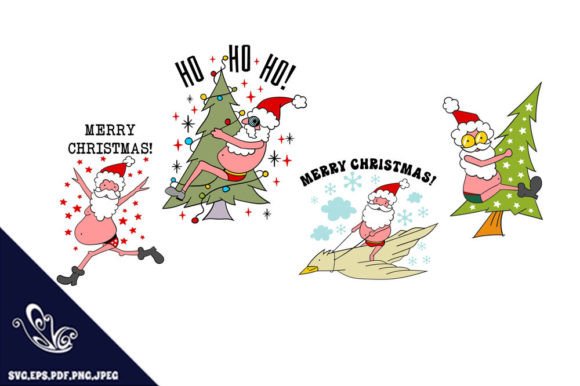
Funny Santa Christmas: A Designer’s Stitch Test
As an embroidery digitizer and product reviewer, I approach every new graphic with a healthy dose of skepticism. When I first opened the Funny Santa Christmas file, my immediate thought was not about how cute it looked on screen, but how it would behave under the needle. This digital download arrives as a cutting file in SVG, EPS, PDF, PNG, and DXF formats, primarily intended for Cricut and Silhouette Cameo users. However, for those of us in the machine embroidery design space, these vector-based graphics serve as the essential blueprint for creating custom stitch files. My evaluation focuses entirely on translating this illustration into a tangible, high-quality embroidered product that can withstand customer scrutiny and repeated washing.
Translating Vector Graphics to Stitch Reality
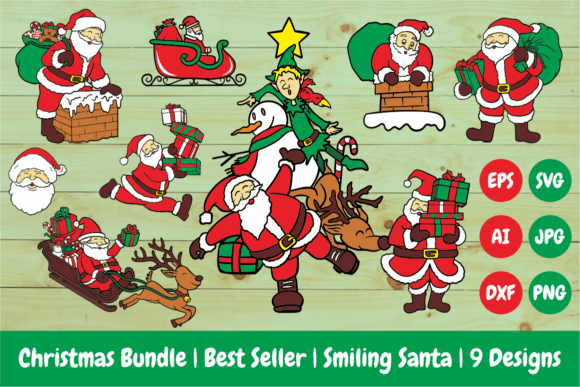
The visual personality of Funny Santa Christmas is undeniably cheerful. As an illustration, it carries a whimsical mood that suggests movement and humor rather than static tradition. For an apparel decorator or Etsy seller, this distinction matters. Static designs are safe; funny designs require precise execution to land the joke. When converting this graphic into an embroidery file, the clean lines of the SVG format are a massive advantage. They allow for accurate tracing without the pixelation issues often found in low-resolution raster images.
However, a cutting file lacks stitch direction data. Before this becomes a viable sweatshirt embroidery project, you must determine if the humor relies on facial expression or body language. If the comedy is in Santa’s eyes, those details cannot be lost to heavy thread texture. If the humor is situational, the silhouette must remain crisp at smaller sizes. I view this graphic as a prime candidate for an applique design. Using fabric for the main body of Santa preserves the lighthearted feel while reducing stitch density, keeping the final product soft and wearable rather than stiff and bulletproof.
Real-World Application: The Holiday Tote Bag Test
To truly evaluate Funny Santa Christmas, I mentally placed it onto a canvas tote bag intended for holiday market sales. Totes are unforgiving because they are functional items that get tossed around, yet customers expect boutique-level aesthetics. In this scenario, the design needs to be large enough to be legible from a distance but balanced so it doesn't overwhelm the bag's proportions.
For this specific tote bag design application, I would avoid full coverage fill stitches. Instead, I recommend a combination approach. Use a sturdy satin stitch border to define the outer edges against the canvas texture, and utilize running stitch for internal detailing like beard texture or belt buckles. This mixed-media stitching style mimics the hand-drawn quality of the original illustration. It also significantly reduces production time, which is critical for craft business profitability during the peak holiday rush. The result is a handmade product that feels artisanal rather than mass-produced, increasing perceived value for the buyer.
Navigating Fabric Variables and Hoop Limitations
Not every substrate plays nicely with humorous holiday graphics. While Funny Santa Christmas shines on stable cottons and canvas, it requires caution elsewhere. If you are planning baby embroidery using this design, you must address the texture issue. Baby onesies are typically ribbed knit or stretchy jersey. Placing a dense version of this graphic directly onto stretch fabric will cause puckering and distortion, ruining both the garment and the joke.
In these cases, consider creating an embroidered patch instead. Stitch the design onto felt or twill with a merrowed edge, then attach it to the baby item. This preserves the integrity of the funny Santa Christmas artwork while accommodating the delicate base fabric. Similarly, be wary of dark fabrics. Humor often lives in the highlights and shadows. If stitching on navy or black velvet, ensure your thread colors provide sufficient contrast. White satin stitches on cream fabric might look elegant, but white running stitches on white fabric will disappear, rendering the facial expression invisible. Always test contrast ratios before committing to a production run.
Critical Zones for Small Details
When resizing this graphic for smaller hoop size limitations, such as 4x4 hoops, detail loss is inevitable. You must make executive decisions about what stays and what goes. Tiny text elements within the illustration may need to be removed or simplified into symbols. Complex shading should be flattened into solid color blocks. Remember that thread has physical thickness; two parallel lines that look distinct on a monitor may merge into a single ridge of thread when stitched. For commercial embroidery consistency, create separate digitized versions for different size ranges rather than simply shrinking one master file.
Professional Standards for Digital Sellers and Makers
Whether you are selling finished goods or digital embroidery file adaptations, professionalism builds trust. Because the source material is a cutting file, verify your licensing rights before listing any derivative works. Confirm whether the original creator permits commercial use of modified embroidery versions. Transparency about your process enhances brand reputation. When creating printable mockups or listing photos, show the design on actual fabric textures, not just flat digital renders. Customers need to see how the stitch density interacts with the material.
For fellow designers adapting Funny Santa Christmas, here are my non-negotiable testing protocols:
- Stabilizer Selection: Match the stabilizer weight to the fabric, not the design complexity. Stretchy knits need cut-away; woven cottons can often use tear-away.
- Black and White Mockups: Convert your stitch preview to grayscale. If the design reads clearly without color, your value structure is sound.
- Wash Testing: Embroider a sample, wash it three times, and measure shrinkage. Funny designs lose their charm when distorted by uneven fabric shrinkage.
- Thread Tension Check: Humorous expressions rely on precise registration. Ensure your machine tension is balanced so bobbin thread doesn't peek through top stitching.
- Licensing Verification: Double-check terms for both personal and commercial usage before investing time in digitizing.
Elevating the Finished Product Value
Ultimately, Funny Santa Christmas succeeds as an embroidery subject because it evokes emotion. In a saturated market of generic holiday clipart, personality stands out. But that personality only survives the transition from screen to fabric through technical discipline. The difference between a mediocre craft fair item and a best-selling personalized gift lies in the unseen decisions made during digitization.
By respecting the limitations of thread and fabric, you honor the original illustration while creating something entirely new. Whether applied to a cozy sweatshirt, a festive kitchen towel, or a boutique-branded cap, this design offers versatility for the thoughtful maker. Just remember that the file format you download is merely the starting line. Your expertise in stitch density, stabilizer choice, and color theory is what transforms a simple cutting file into a cherished holiday embroidery keepsake. Approach each project with intention, test rigorously, and let the humor shine through quality craftsmanship.