Howdy Santa Retro Christmas: A Designer’s Review
When sourcing graphics for seasonal production, I look for more than just festive cheer; I look for structural integrity and marketability. As a designer who regularly bridges the gap between digital illustrations and physical embroidery projects, my first impression of Howdy Santa Retro Christmas was cautiously optimistic. The retro aesthetic is currently dominating the handmade market, but translating vintage vibes into stitch-friendly formats requires careful evaluation. This graphic strikes a balance between nostalgic charm and modern clarity, making it a strong candidate for various creative applications. However, because this asset is provided as a 300 DPI PNG illustration rather than a pre-digitized machine embroidery design, it demands a specific workflow to ensure the final stitched product meets professional standards.
Evaluating Visual Hierarchy for Stitch Translation
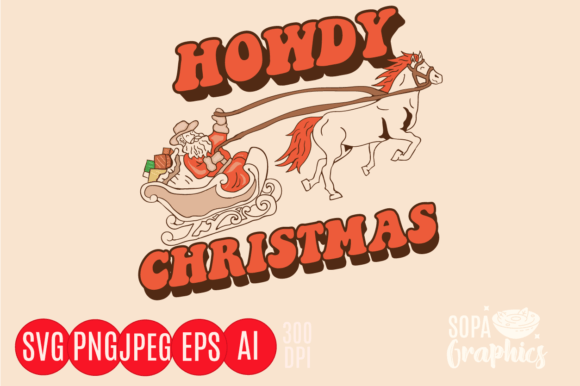
The immediate strength of Howdy Santa Retro Christmas lies in its distinct silhouette and bold color blocking. From an embroidery digitizing perspective, this is crucial. Intricate, painterly gradients often get lost or require excessive stitch density that can damage fabric, but this design appears to utilize solid shapes and clear outlines. This suggests it will translate beautifully into satin stitch borders and clean fill stitch areas. The "Howdy" typography likely offers excellent opportunities for lettering, provided the font weight is sufficient to prevent thread breaks during production.
For my current project pipeline, I am evaluating this graphic specifically for a line of holiday tote bags and boutique sweatshirts. In a real-life scenario, imagine preparing a custom embroidered tote bag for a winter craft fair. Customers are drawn to items that feel authentic and tactile. The retro personality of this Santa design evokes that mid-century warmth that buyers associate with quality heritage goods. When placed on a natural canvas tote or a cream-colored fleece sweatshirt, the design’s visual weight anchors the product without overwhelming it. It feels like a personalized gift rather than mass-produced merchandise, which is essential for maintaining higher price points in a small shop product lineup.
Real-World Application: Apparel and Home Decor
Versatility is key for any commercial embroidery asset. Howdy Santa Retro Christmas performs exceptionally well across different substrates because of its adaptable composition. For custom apparel, such as t-shirts and sweatshirts, the design serves as a central focal point. The retro color palette pairs naturally with heather grays, navies, and forest greens, allowing for easy coordination with existing inventory. For Etsy sellers focusing on nursery decor or baby embroidery, the friendly, non-intimidating expression of this Santa illustration makes it appropriate for younger demographics, unlike more traditional, stern Victorian depictions.
Beyond apparel, this graphic has strong potential for home goods. When considering pillow covers or tea towels, the design’s aspect ratio allows for flexible placement. It can be centered for a classic look or offset to accommodate monogramming, increasing its value as a personalized gift option. For makers creating embroidered patches, the bold lines and limited color transitions make this an ideal candidate for merrowed edge finishing. The clarity of the illustration ensures that even when scaled down for a patch or cap, the facial features and text remain legible and crisp.
Navigating Fabric Limitations and Technical Constraints
Despite its strengths, Howdy Santa Retro Christmas requires strategic planning regarding fabric choice and stabilization. Because this is a graphic source file, the digitizer must interpret the artwork. If you are stitching this on textured fabrics like terry cloth or boucle, fine details in the hat trim or beard may disappear. In these cases, I recommend adding a knockdown stitch layer beneath the design or simplifying the digitized version to emphasize bolder elements. Thin, stretchy fabrics present another challenge; the density required to render the retro colors smoothly could cause puckering if the proper stabilizer and hoop size are not selected.
Dark fabrics also warrant caution. While the design likely includes its own color scheme, stitching light retro colors onto black or navy garments increases stitch count significantly due to the need for underlay and coverage. This affects production time and garment drape. For dark backgrounds, consider testing a white outline or border to separate the design from the fabric, enhancing visibility without excessive density. Additionally, while the description mentions "Retro Valentine vibes," ensure the colorway is adjusted sufficiently for Christmas contexts to avoid customer confusion, unless that crossover aesthetic is intentional for your brand.
Quality Control and Professional Presentation
The perceived value of a finished product hinges entirely on execution. Before listing any item featuring Howdy Santa Retro Christmas, rigorous testing is non-negotiable. Always run a sew-out on scrap fabric that matches your final production material. Check thread color contrast against the actual fabric, not just the screen. Verify that small text elements are readable and that stitch density does not create bulletproof stiff spots. Inspect the registration marks; misaligned layers in a multi-color retro design will instantly devalue the item and erode customer trust.
For digital product sellers and creative entrepreneurs using this graphic for printable mockups or marketing assets, the 300 DPI resolution is adequate for web previews and standard print materials. However, always confirm licensing terms before selling finished items or distributing derivative digital embroidery files. Professionalism extends beyond the stitch; it encompasses legal compliance and transparent communication with buyers about what they are purchasing. Whether you are a hobbyist making holiday gifts or a commercial embroidery business fulfilling bulk orders, respecting the intellectual property and technical limitations of the source art protects your reputation.
Strategic Notes for Makers and Sellers
To maximize the potential of Howdy Santa Retro Christmas in your production workflow, keep these practical considerations in mind:
- Digitizing Verification: Since this is a PNG illustration, ensure your digitizer creates a file optimized for your specific machine and hoop size. Do not assume a generic auto-digitize will capture the retro nuance correctly.
- Stabilizer Selection: Match your stabilizer to the fabric weight. Use cutaway for knits and sweatshirts to prevent distortion, and tear-away or wash-away for stable wovens like canvas tote bags.
- Color Matching: Retro palettes often use muted tones. Create a physical thread chart reference to ensure your polyester or rayon threads match the intended vintage mood of the graphics.
- Mockup Testing: Test the design in black and white mockups to evaluate value contrast. If the design looks muddy without color, it needs better separation in the digitizing stage.
- Wash Testing: If producing baby embroidery or kitchen textiles, wash the test sample to ensure thread coverage holds up and no shrinkage distorts the retro proportions.
- Licensing Check: Explicitly verify if the license covers commercial embroidery of physical products versus digital redistribution. This distinction is vital for Etsy sellers and small business owners.
Ultimately, Howdy Santa Retro Christmas is a promising asset for the discerning maker. Its success depends less on the graphic itself and more on the thoughtful application of embroidery principles. By treating this illustration as a blueprint rather than a finished solution, you can transform it into high-quality, desirable products that resonate with customers seeking authentic holiday craftsmanship. Whether applied to a cozy sweatshirt, a cherished nursery blanket, or a festive market tote, this design carries the potential to elevate your seasonal collection when executed with precision and care.